Texas Wildbuds
Persicaria pensylvanica
(Pennsylvania Smartweed)
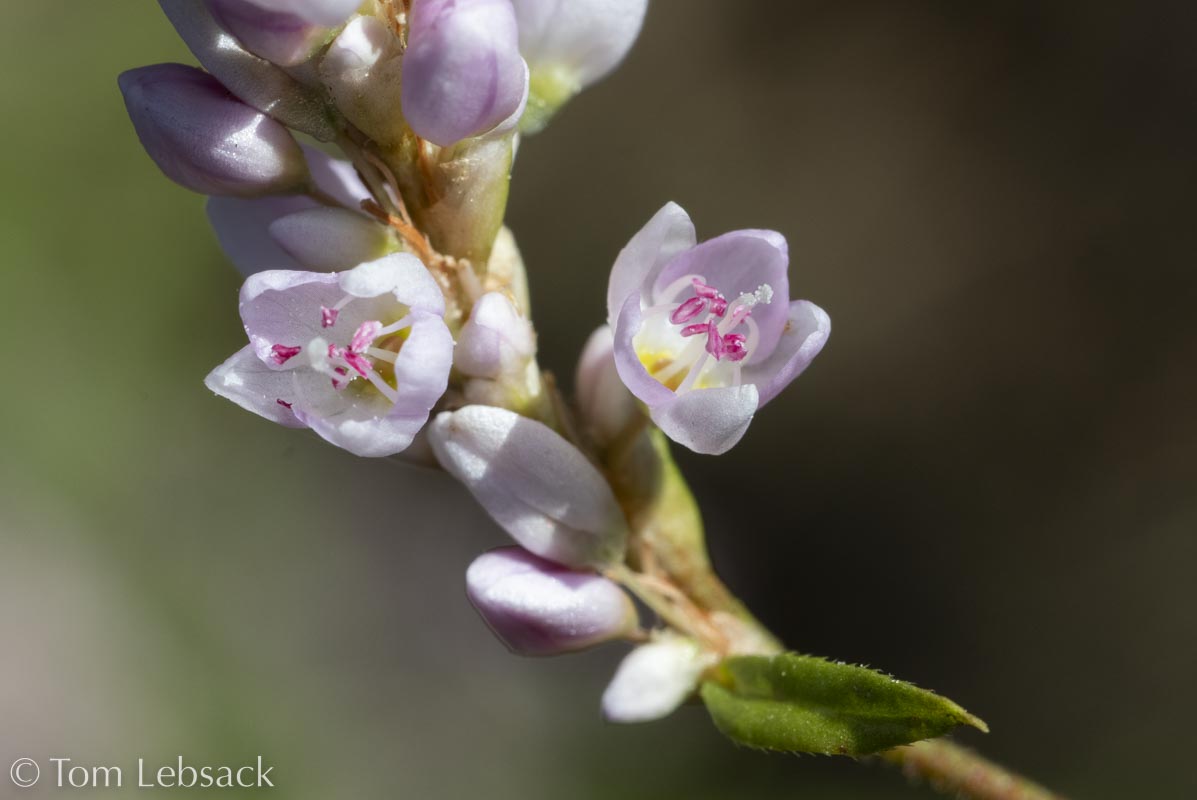
Persicaria pensylvanica, George Bush Park, Houston, Harris Co. 6580

Persicaria pensylvanica, George Bush Park, Houston, Harris Co. 6568
Persicaria pensylvanica, George Bush Park, Houston, Harris Co. 6573
Persicaria pensylvanica, George Bush Park, Houston, Harris Co. 6584
Persicaria pensylvanica, George Bush Park, Houston, Harris Co. 6594
Persicaria pensylvanica, George Bush Park, Houston, Harris Co. 6588
| Scientific Name | Persicaria pensylvanica (Polygonum pensylvanicum) | USDA PLANTS Symbol | POPE2 |
| Common Name | Pennsylvania Smartweed | ITIS Taxonomic Serial No. | 518745 |
| Family | Polygonaceae (Buckwheat) | SEINet Reference |
Click Here |
| Description | Habitat: Moist soils in disturbed places, ditches, riverbanks, fields and shorelines; up to 7000 ft. Plant: Erect annual 1 to 5 ft. or more tall; stems are simple or branched, ribbed, smooth or slightly hairy above; brownish, papery, ocrea 0.2 to 0.8 inches long, usually with hairless edges and usually no bristles. Leaves: Alternate, lanceolate 2 to 8 inches long; smooth surfaces or with small appressed hairs on lower surface; short petioles 0.8 inches long or less. Inflorescence: Numerous racemes, terminal or arising from axils, erect or ascending, usually straight and dense, uninterrupted and 0.2 to 2 inches long of many small flowers; each flower about 1/4-inch across with 5 greenish-white to pink tepals, 6 to 8 stamens with yellow, pink or red anthers and 2 styles, stamens being nearly the same lengths as styles (homostyly) and neither are protruding; smooth greenish-white to pink calyx 1/8-inch long. Bloom Period: May to November. References: "Manual of the Vascular Plants of Texas" by Correll and Johnston, Missouri Plants, SEINet, Guide to the Smartweeds (Persicaria) of North America by Daniel Atha (iNaturalist) and "Wildflowers of Texas" by Michael Eason. |
BONAP Distribution Map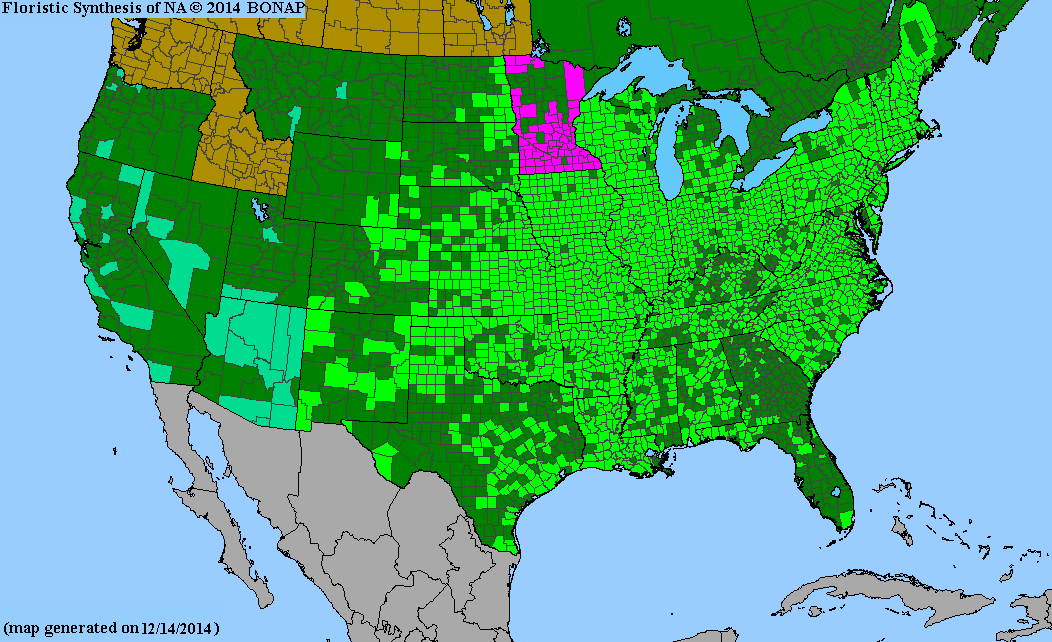 Map Color Key Map Color Key |
Texas Status: Native |
Banner photo of Castilleja indivisa and Lupinus ssp. taken along FM 1323 north of Johnson City, Blanco County
© Tom Lebsack 2026
Every attempt is made to provide accurate, up-to-date, and relevant information, but the completeness or accuracy of any information presented on this website cannot be guaranteed. I use authoritative references to insure high standards of accuracy and review and update the information frequently. Please contact me if you find errors.