Texas Wildbuds
Erythrostemon mexicanus
(Mexican Holdback)

Erythrostemon mexicanus, Resaca de la Palma State Park, Cameron Co. 3697
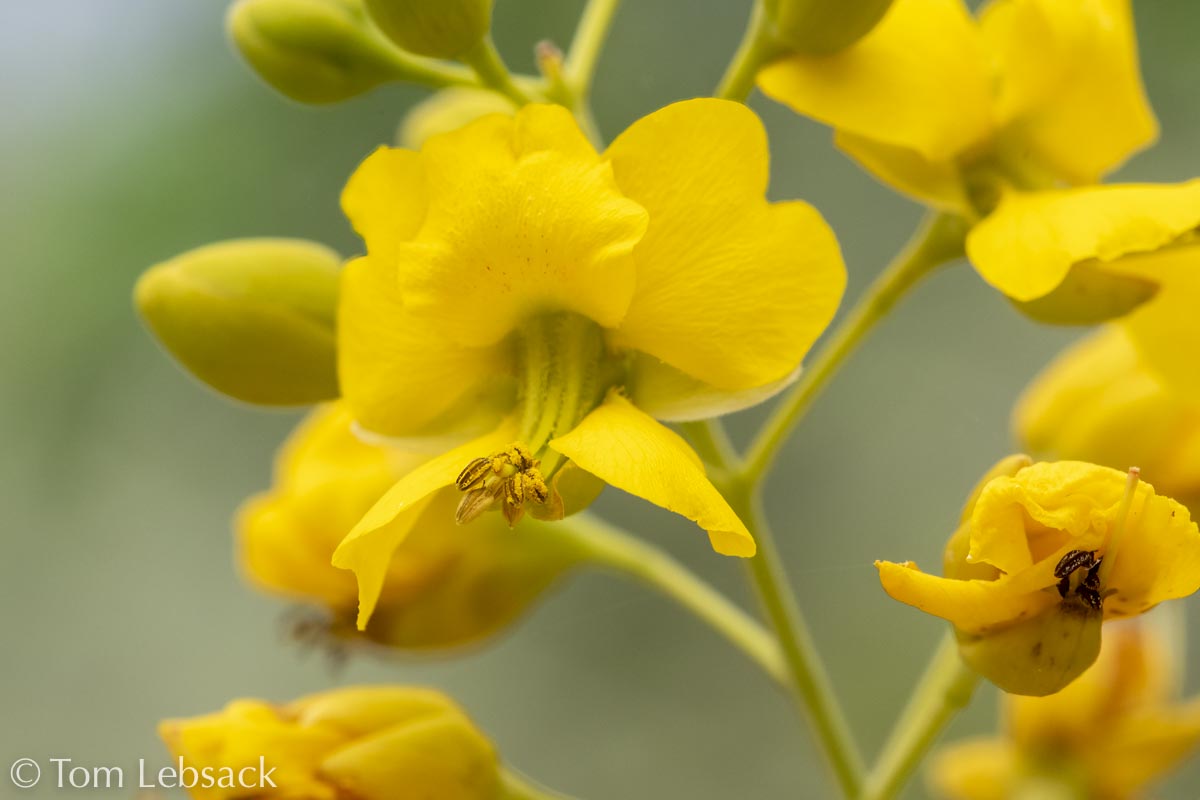
Erythrostemon mexicanus, Resaca de la Palma State Park, Cameron Co. 3714
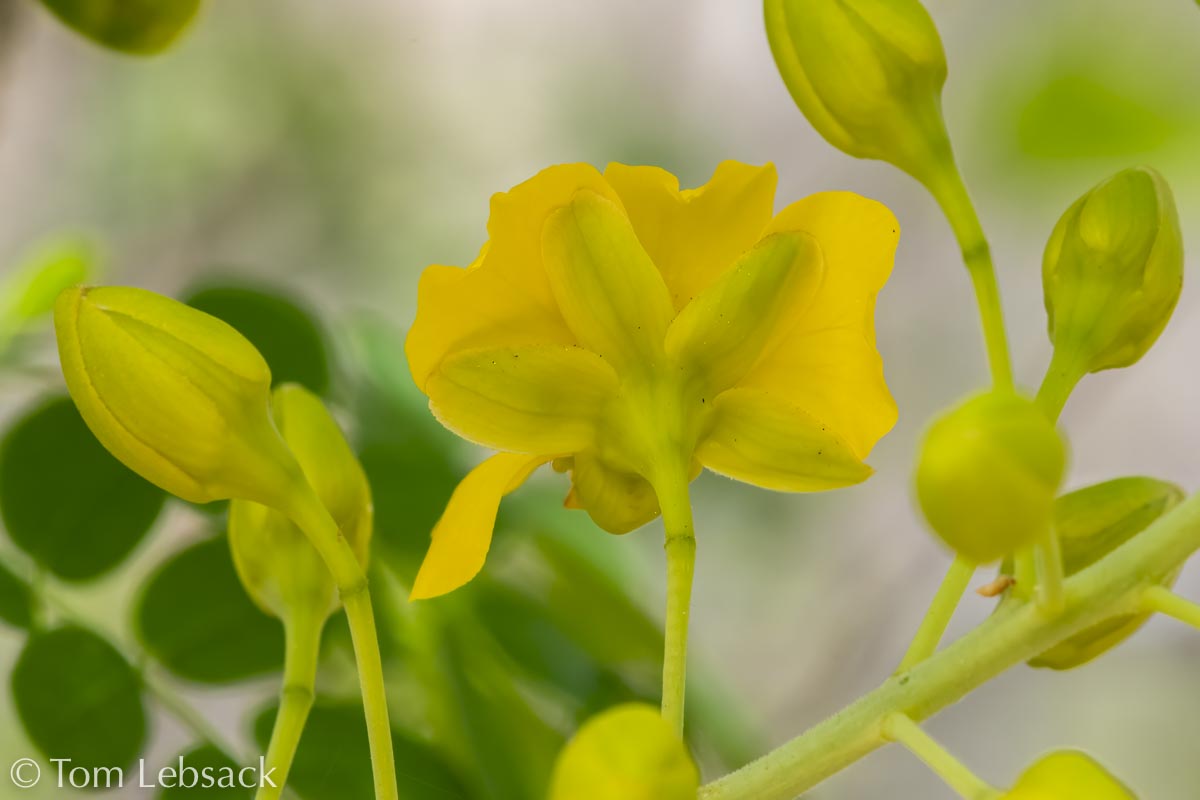
Erythrostemon mexicanus, Resaca de la Palma State Park, Cameron Co. 3719
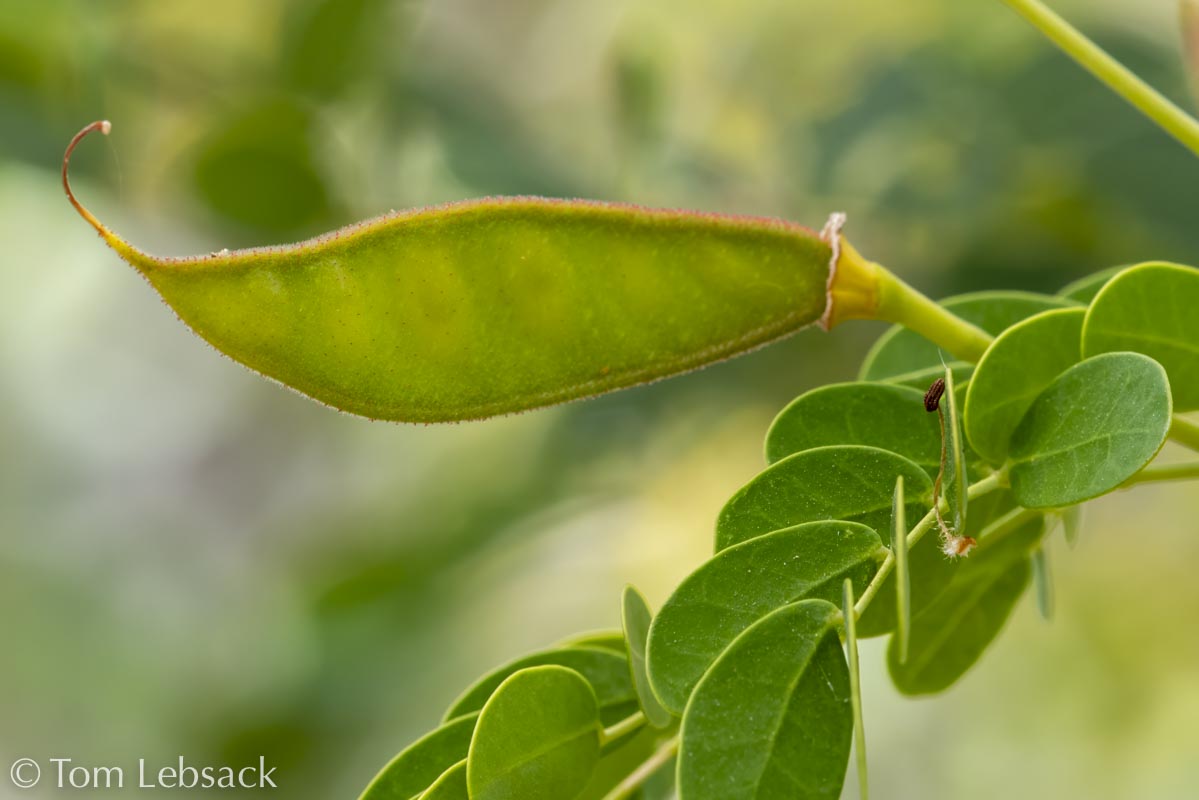
Erythrostemon mexicanus, Resaca de la Palma State Park, Cameron Co. 3716
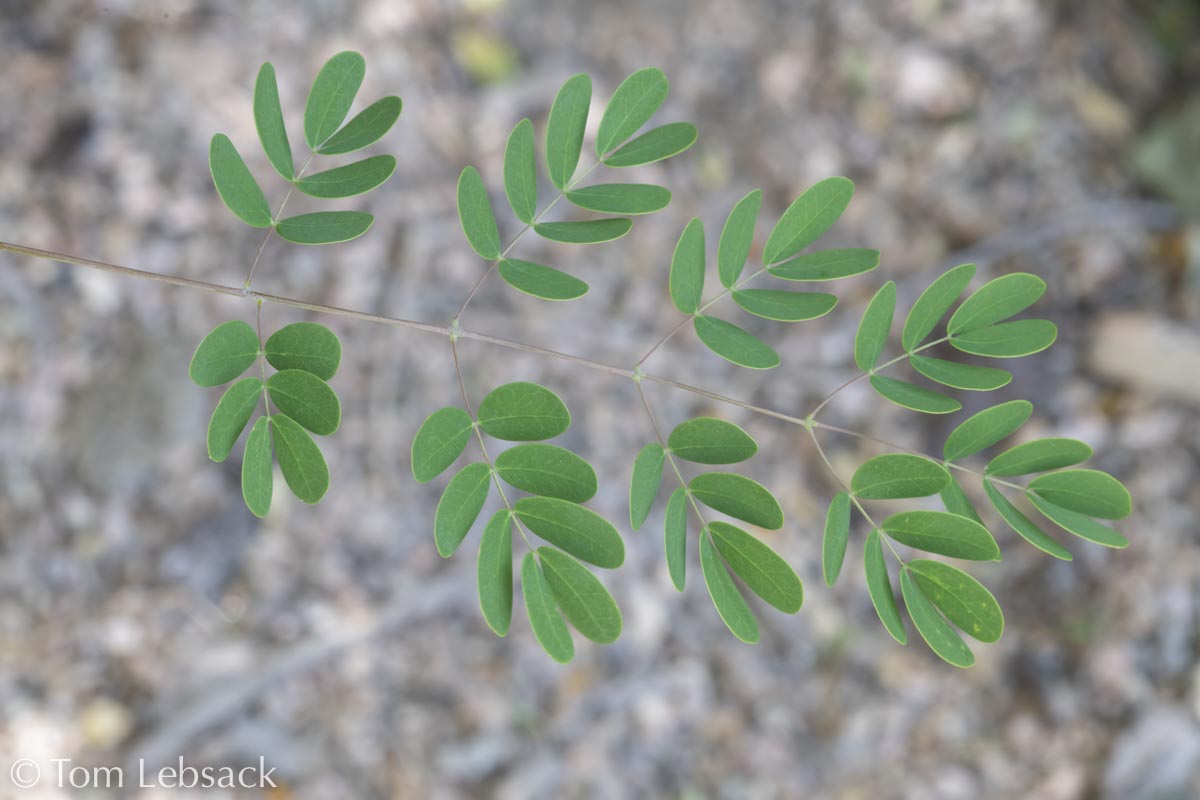
Erythrostemon mexicanus, Resaca de la Palma State Park, Cameron Co. 3707

Erythrostemon mexicanus, Resaca de la Palma State Park, Cameron Co. 6078
| Scientific Name | Erythrostemon mexicanus (Caesalpinia mexicana, Poincianella mexicana) | USDA PLANTS Symbol | CAME |
| Common Name | Mexican Holdback, Mexican Bird-of-paradise | ITIS Taxonomic Serial No. | 184639 |
| Family | Fabaceae (Pea) | SEINet Reference |
Click Here |
| Description | Habitat: Growing in low, deciduous woods, open semi-arid scrub, washes and slopes. Plant: Small evergreen tree or large shrub, 10 to 15 ft. tall and 6 to 10 ft. wide; unarmed branches with greenish gray, smooth bark having raised orange-brown or pale gray lenticels (small, porous openings) in semaphore lines; newer stems are green and smooth or with pubescent hairs. Leaves: Compound, bi-pinnate leaves; 2 to 5 pairs of opposite pinnae along a rachis (central stalk) 1-5/8 to 4-3/4 inches long with terminal pinna at the tip; leaflets in 2 to 6 opposite pairs with obovate-elliptic blades, 0.4 to 1.1 inches long and 0.2 to 0.7 inches wide; surfaces with conspicuous veins; on petioles 0.8 to 3.1 inches long. Inflorescence: Clusters of 10 to 30 yellow flowers in leaf axils or stem tips, 1-5/8 to 12 inches long; flowers 1/2 to 3/4-inch across with 5 petals, large upper petal is banner-like and bent backward, lower two petals smaller and with notched tips, lateral petals are smaller yet; curved column of 10 protruding stamens with yellow, hairy filaments and yellow-turning-brown anthers, all surrounding the pistil; calyx with 5 pubescent oblong lobes 1/4 to 3/8-inch long. Bloom Period: February to July. Fruit: Flat pod 1-3/4 to 3 inches long and 1/2 to 3/4-inch wide, with beak at tip; surface smooth or with pubescent hairs and usually glandular. References: Flora of North America and iNaturalist, Caesalpina mexicana in "Manual of the Vascular Plants of Texas" by Correll and Johnston and Arid Zone Trees. Note: Native of Northern Mexico; plants shown here are wild, however, they may be escapees from cultivation or migrated from nearby Mexico. |
BONAP Distribution Map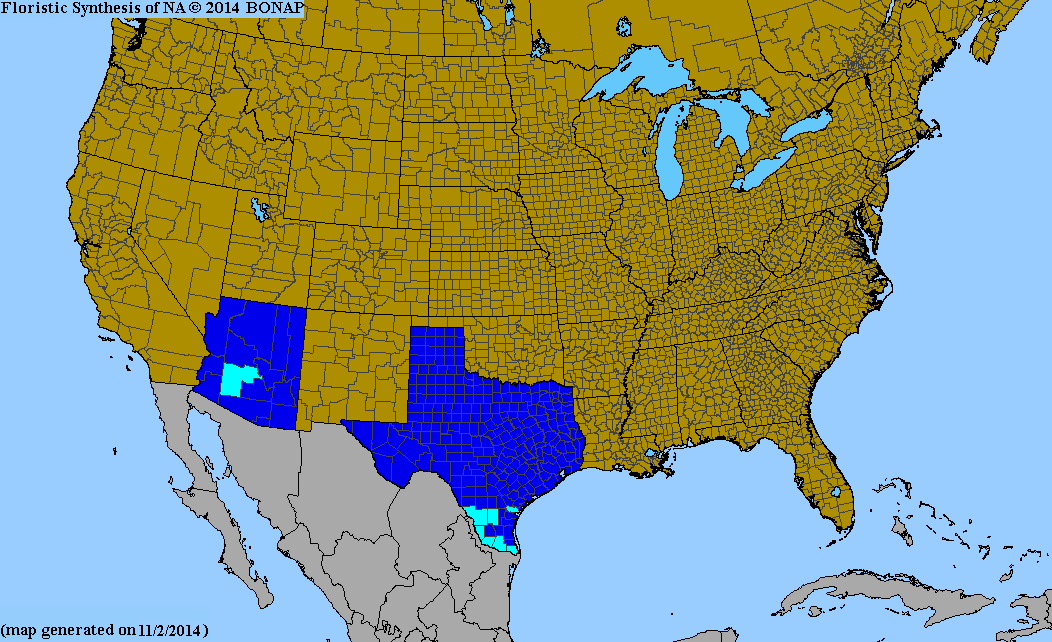 Caesalpinia mexicana Map Color Key |
Texas Status: Introduced/Native |
Banner photo of Castilleja indivisa and Lupinus ssp. taken along FM 1323 north of Johnson City, Blanco County
© Tom Lebsack 2026
Every attempt is made to provide accurate, up-to-date, and relevant information, but the completeness or accuracy of any information presented on this website cannot be guaranteed. I use authoritative references to insure high standards of accuracy and review and update the information frequently. Please contact me if you find errors.