Texas Wildbuds
Castela erecta ssp. texana
(Texan Goatbush, Amargosa)
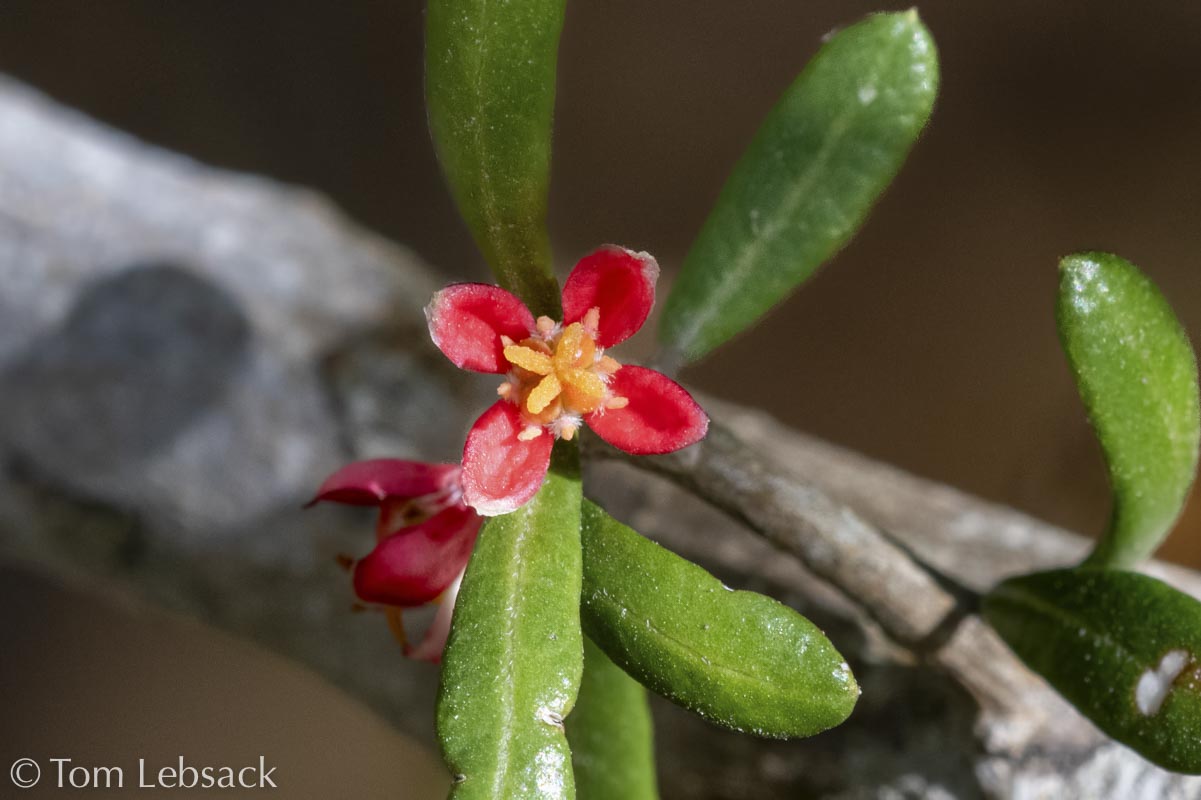
Castela erecta ssp. texana, Resaca de la Palma State Park, Cameron Co. 3655
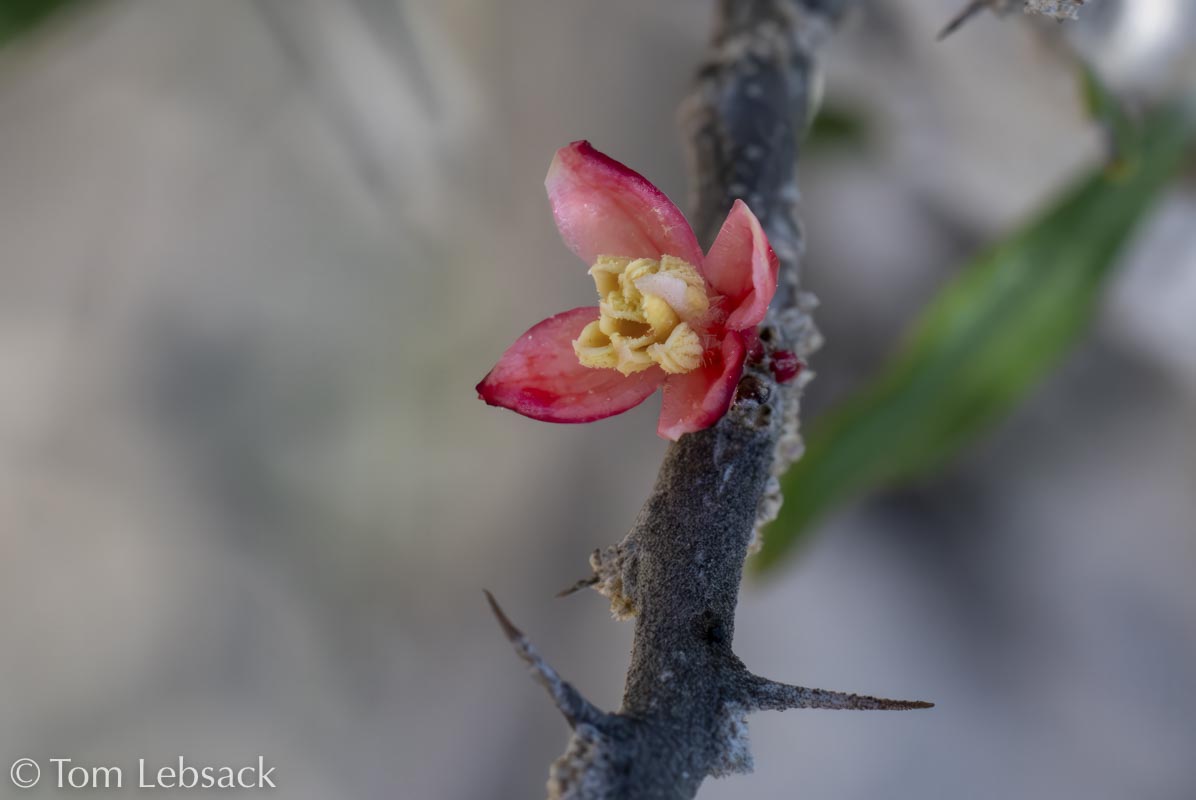
Castela erecta ssp. texana, Falcon State Park, Starr Co. 4237
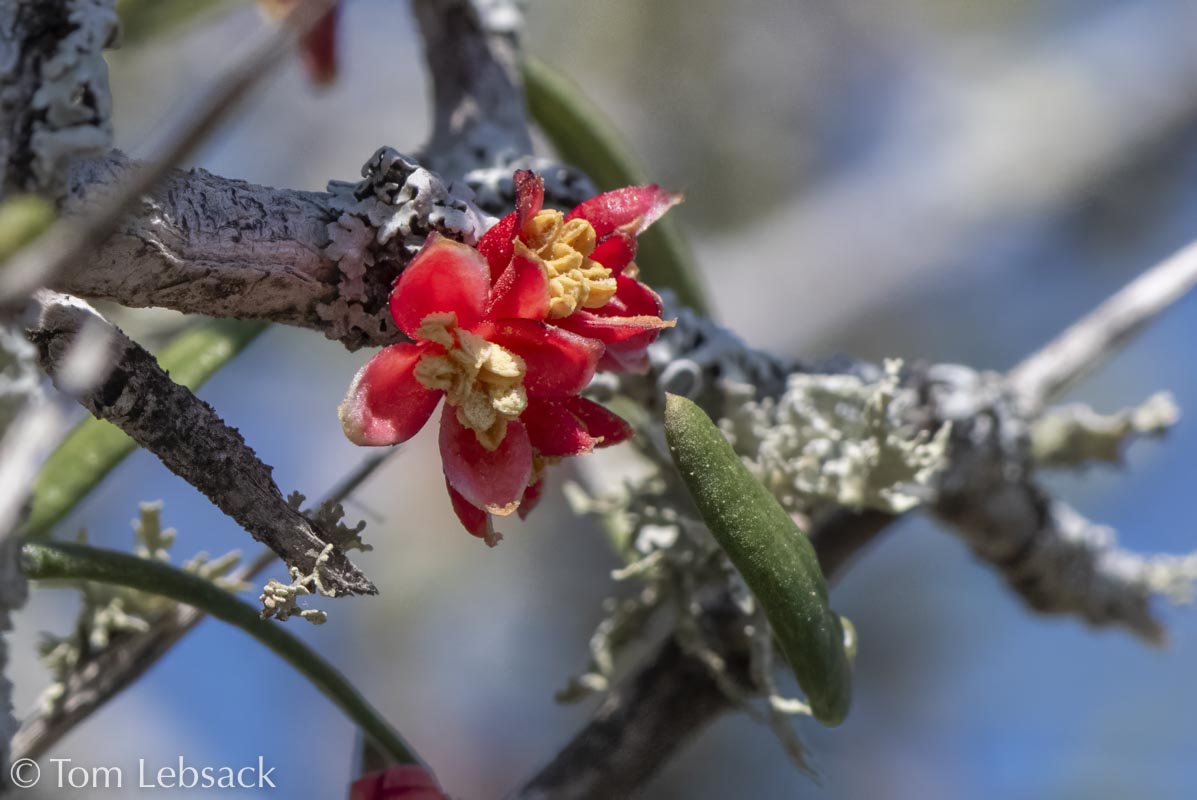
Castela erecta ssp. texana, Falcon State Park, Starr Co. 4233

Castela erecta ssp. texana, Resaca de la Palma State Park, Cameron Co. 3650
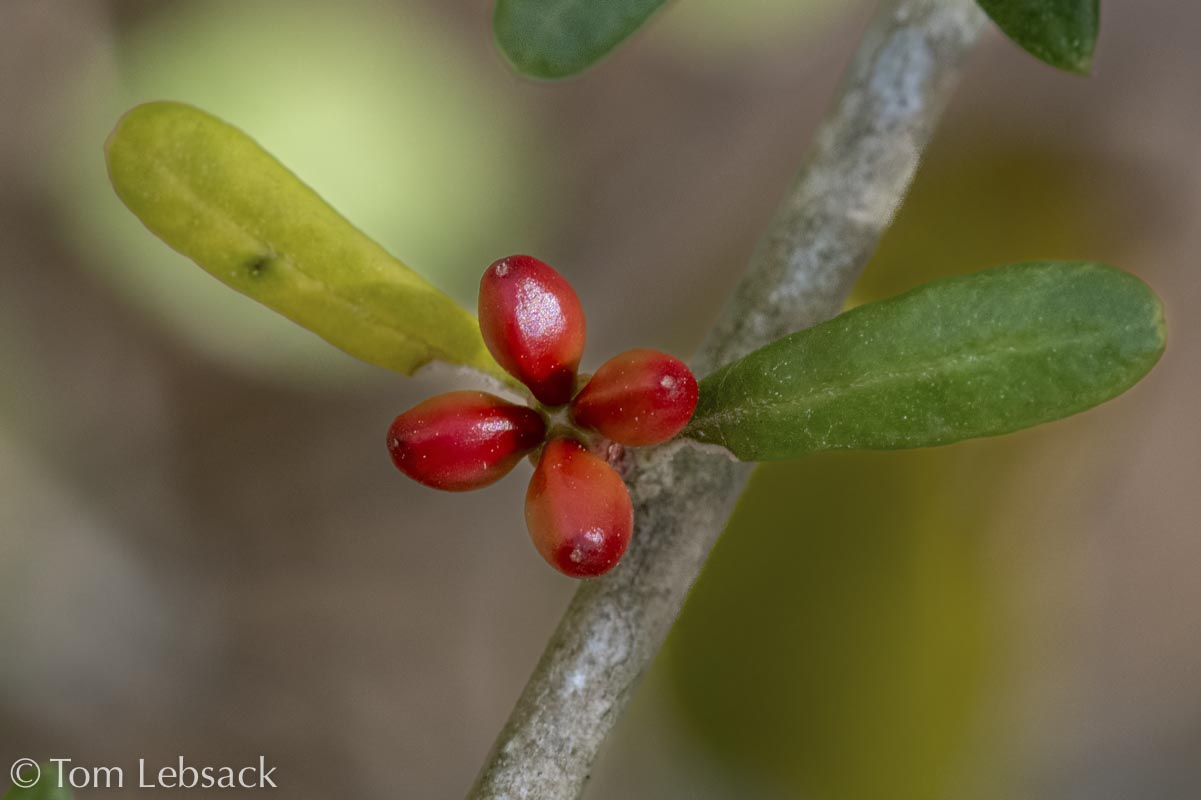
Fruit, Castela erecta ssp. texana, Resaca de la Palma State Park, Cameron Co. 3650
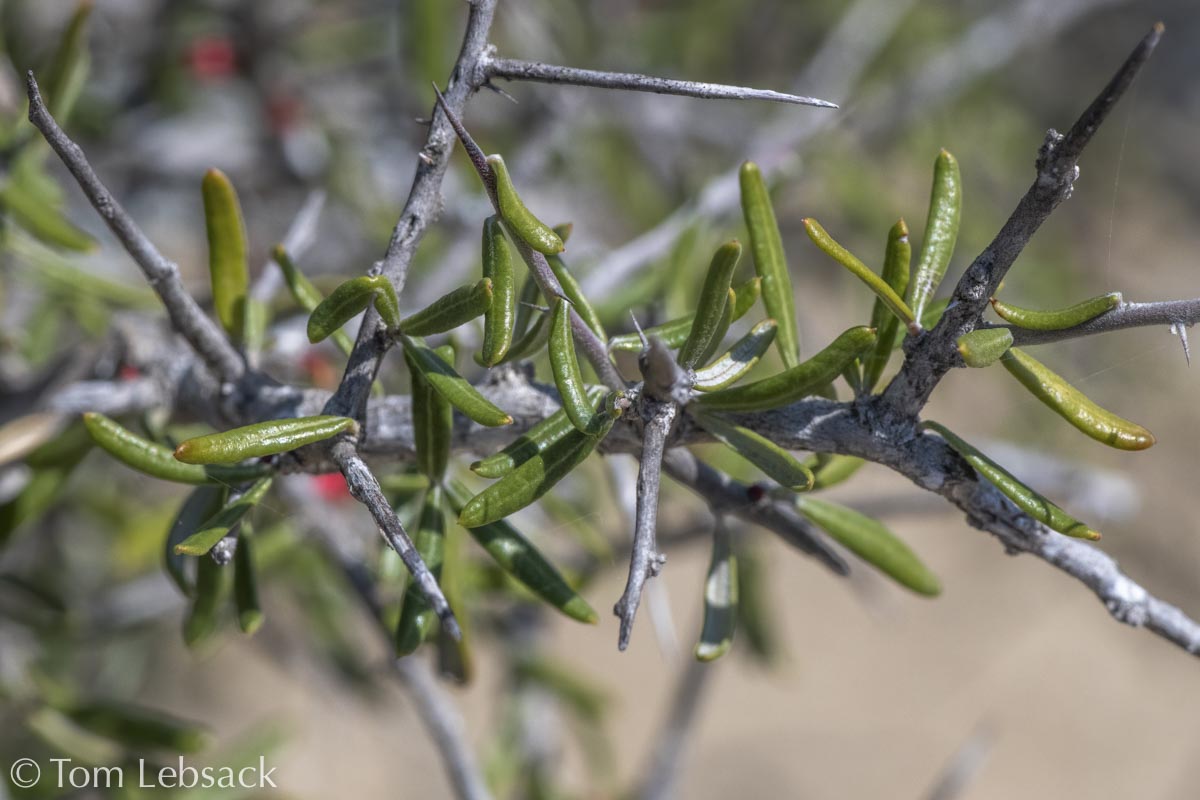
Castela erecta ssp. texana, Falcon State Park, Starr Co. 4240
Castela erecta ssp. texana, Falcon State Park, Starr Co. 6170
| Scientific Name | Castela erecta ssp. texana (Castela texana) | USDA PLANTS Symbol | CAERT |
| Common Name | Texan Goatbush, Amargosa | ITIS Taxonomic Serial No. | 35787 |
| Family | Simaroubaceae (Quassia) | SEINet Reference |
Click Here |
| Description | Habitat: Dry, gravelly limestone soils in brushlands, thickets and mesquite prairies of far South and Southwest Texas. Plant: Erect, densely-branched shrub up to 6 ft. tall; branches and axils are armed and branchlet tips are sharply-pointed; older bark is dark gray with black splotches, younger bark is light gray; plants may either be dioecious (separete plants for male and female) or polygamo-dioecious. Leaves: Linear-oblong to laceolate or narrowly oblanceolate up to 1-inch long and 1/4-inch wide and nearly sessile; margins are revolute (rolled under); tips are obtuse or acute to mucronate; leathery; upper surfaces are shiny, dark green; lower are silvery. Inflorescence: Small red flowers borne singly or in small clusters in leaf axils, sessile or nearly so, each about 1/4-inch across; 4 petals (or sepals), 8 stamens surrounding yellow-ish 4-lobed stigmas. Bloom Period: March to May. Fruit: Four small, shiny red berries, ~1/4-inch long arranged in a spreading radial pattern; nearly round or droplet-shaped. References: "Flowering Plants of Trans-Pecos Texas and Adjacent Areas" by Powell, Worthington and Powell and C. texana in "Manual of the Vascular Plants of Texas" by Correll and Johnston. |
BONAP Distribution Map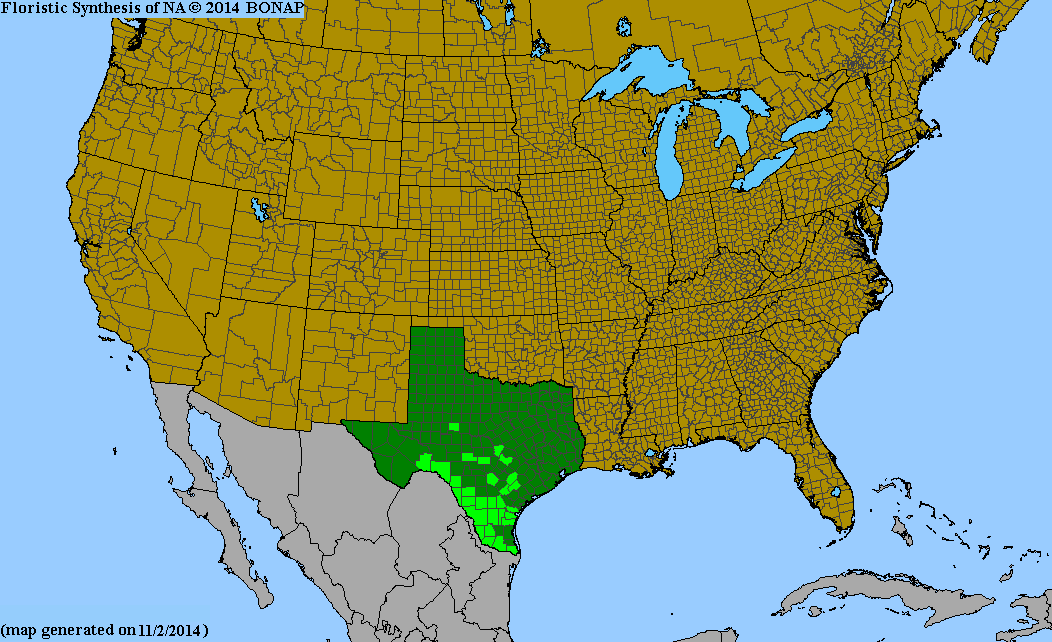 Map Color Key Map Color Key |
Texas Status: Native |
Banner photo of Castilleja indivisa and Lupinus ssp. taken along FM 1323 north of Johnson City, Blanco County
© Tom Lebsack 2026
Every attempt is made to provide accurate, up-to-date, and relevant information, but the completeness or accuracy of any information presented on this website cannot be guaranteed. I use authoritative references to insure high standards of accuracy and review and update the information frequently. Please contact me if you find errors.