Texas Wildbuds
Pinus taeda
(Loblolly Pine)
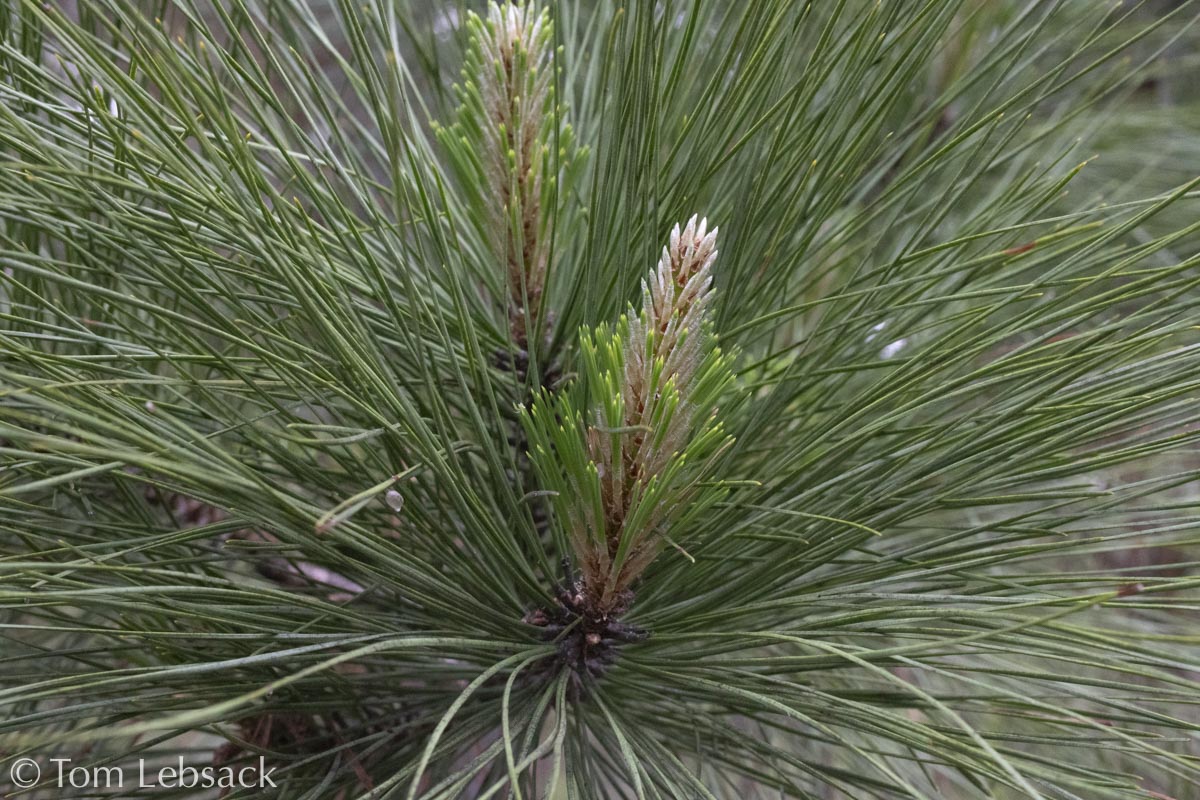
Pinus taeda, needle buds, Bastrop State Park, Bastrop Co. 5752
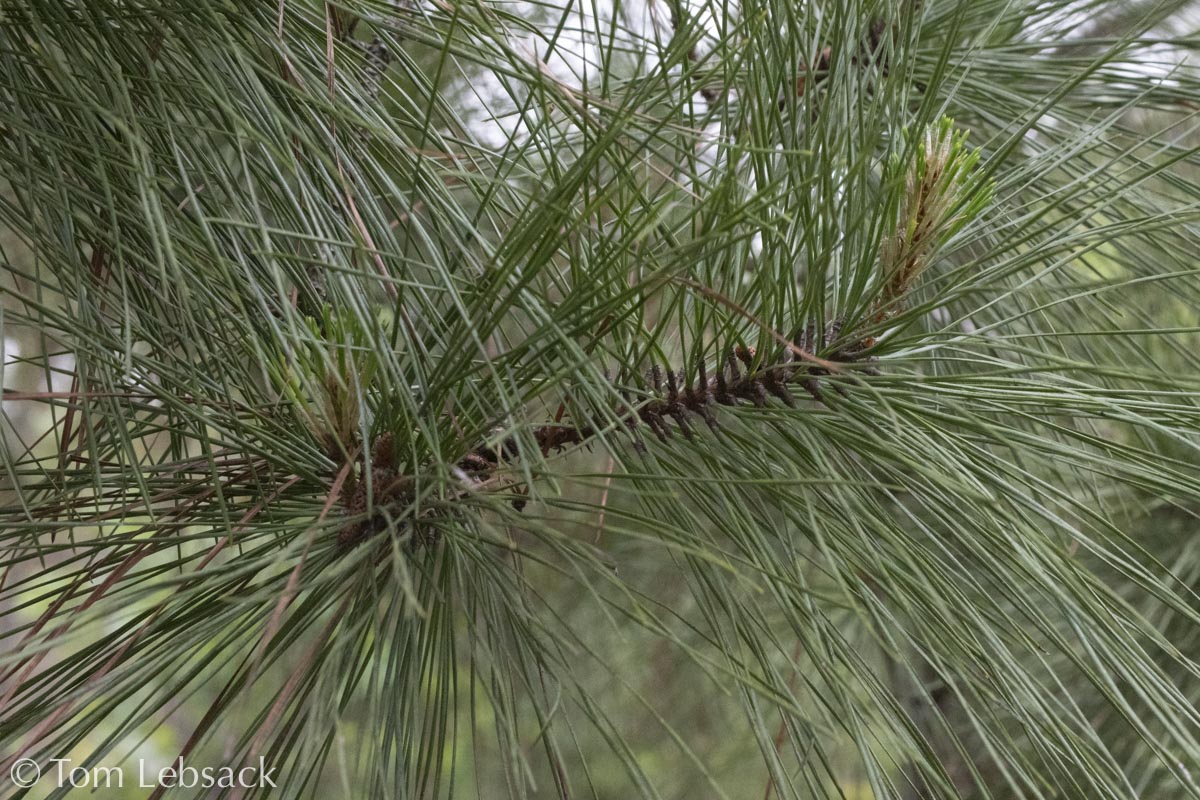
Pinus taeda, Bastrop State Park, Bastrop Co. 5761

Pinus taeda, Bastrop State Park, Bastrop Co. 5768
Pinus taeda, Bastrop State Park, Bastrop Co. 6682
Pinus taeda, Bastrop State Park, Bastrop Co. 6683
| Scientific Name | Pinus taeda | USDA PLANTS Symbol | PITA |
| Common Name | Loblolly Pine | ITIS Taxonomic Serial No. | 18037 |
| Family | Pinaceae (Pine) | SEINet Reference |
Click Here |
| Description |
Habitat: Sands, sandy loams or gravelly soils on ridges, hillsides and savannahs; in Texas from the eastern third west to Bastrop County. Plant: Conifer tree 60 to 115 ft. tall, straight trunk 2 to 4 ft. in diameter; speading and ascending branches form a rounded, open crown; lower branches die with age; bark forms square or irregularly rectangular, scaly, gray plates; twigs are reddish-brown to dark yellow-brown. Needles: Buds are cylindrical, pale brownish-white, less than 1/2-ich long; needles in bundles of 3 (sometimes 2) per fascicle, persisting 3 years, 4-3/4 to 9 inches long, straight, slightly twisted and deep yellow-green. Cones: Male and female cones on same tree; male cones are cylindric, 3/4 to 1-5/8 inches long, yellow to yellow-brown in large clusters at branch tips; female cones are solitary or in clusters of 2 or 3; cones are ovoid-cylindric to conical in shape, 2-3/4 to 4-3/4 inches long, reddish brown. References: "Manual of the Vascular Plants of Texas" by Correll and Johnston, Flora of North America and Wildflower Center. Note: According to Correll and Johnston, "This species comprises the so-called 'Lost Pines' of Bastrop County. This...is misleading since the pines of Bastrop and Fayette counties are now known to be definitely connected with the main body of pines that are the principal component of the East Texas forest." And, according to the Wildflower Center P. taedus is "among the fastest-growing southern pines, it is extensively cultivated in forest plantations [throughout the South] for pulpwood and lumber." |
BONAP Distribution Map Map Color Key Map Color Key |
Texas Status: Native |
Banner photo of Castilleja indivisa and Lupinus ssp. taken along FM 1323 north of Johnson City, Blanco County
© Tom Lebsack 2026
Every attempt is made to provide accurate, up-to-date, and relevant information, but the completeness or accuracy of any information presented on this website cannot be guaranteed. I use authoritative references to insure high standards of accuracy and review and update the information frequently. Please contact me if you find errors.