Texas Wildbuds
Argemone sanguinea
(Red Prickly Poppy)
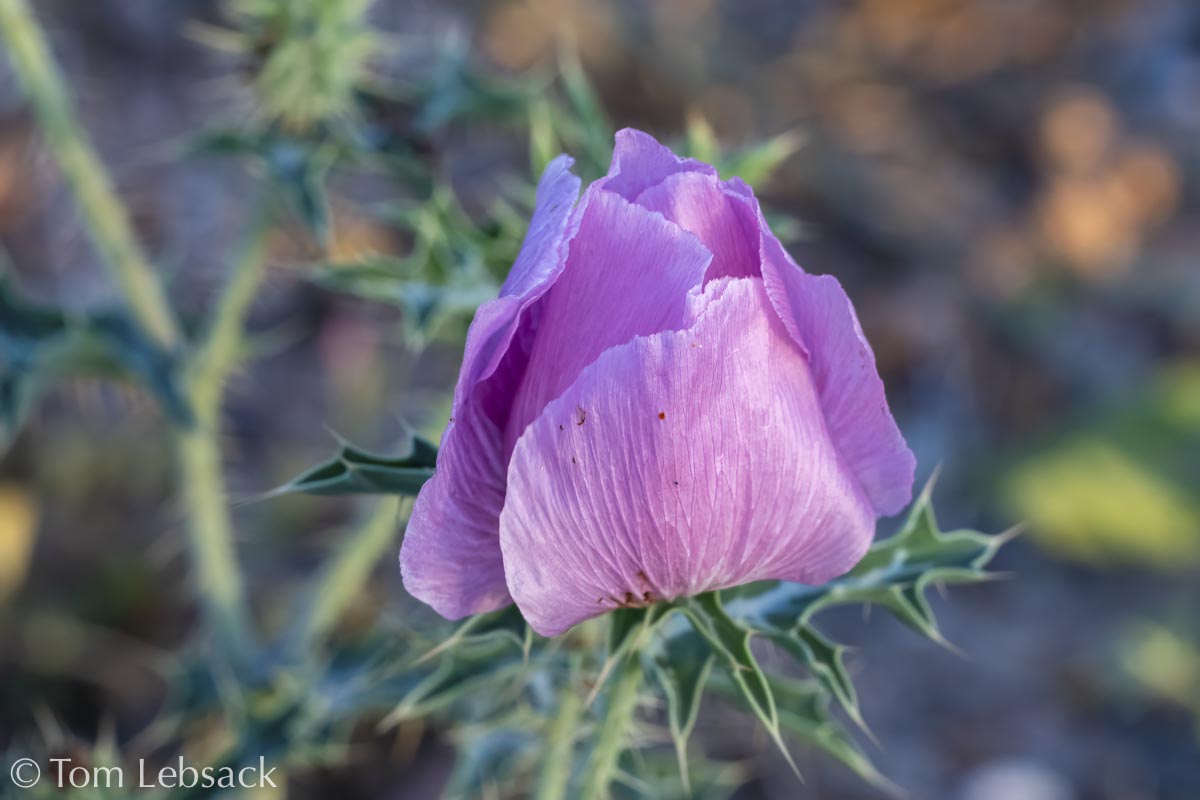
Argemone sanguinea, Palmview, Hidalgo Co. 3849
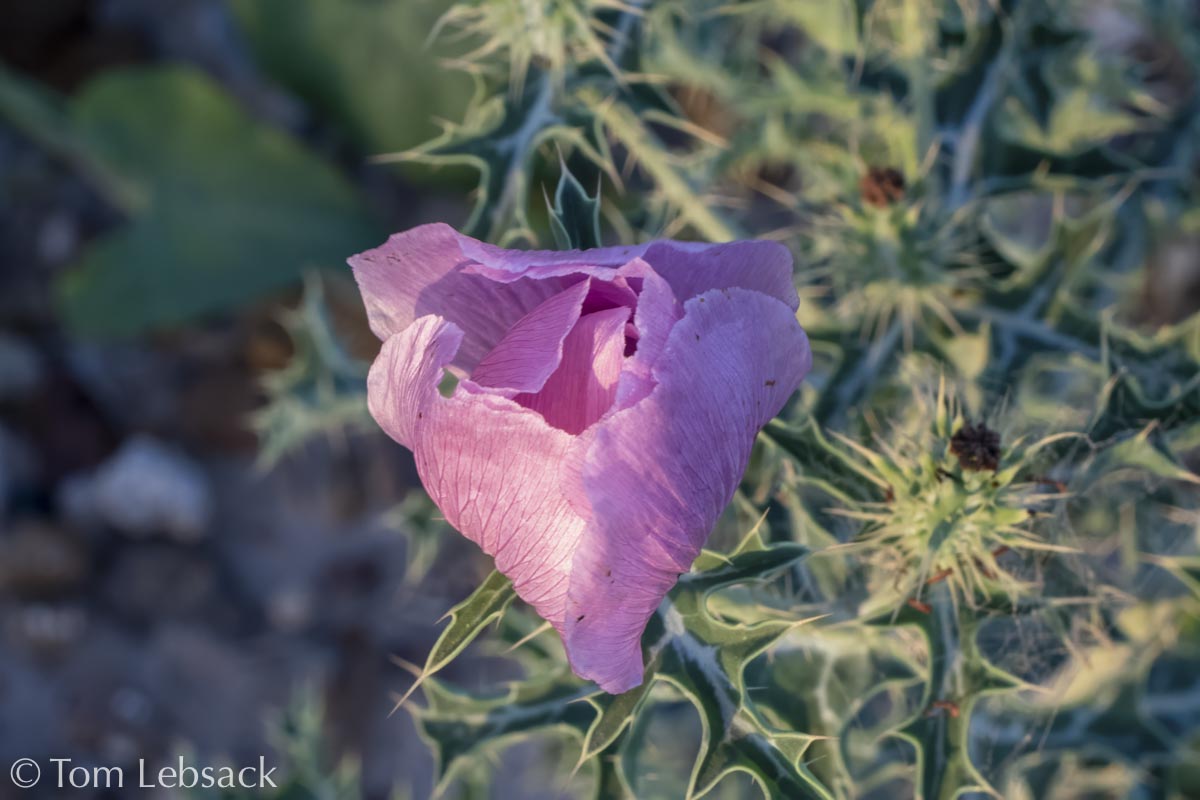
Argemone sanguinea, Palmview, Hidalgo Co. 3845
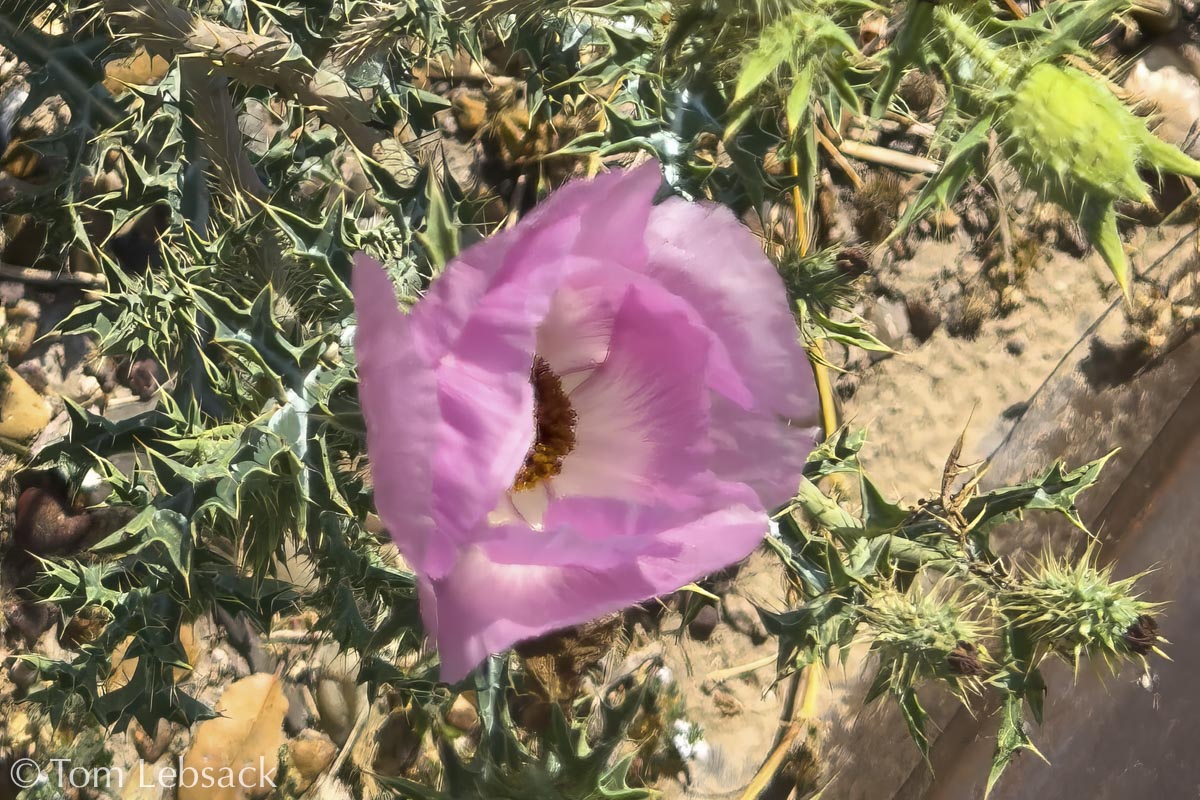
Argemone sanguinea, Palmview, Hidalgo Co. 6109
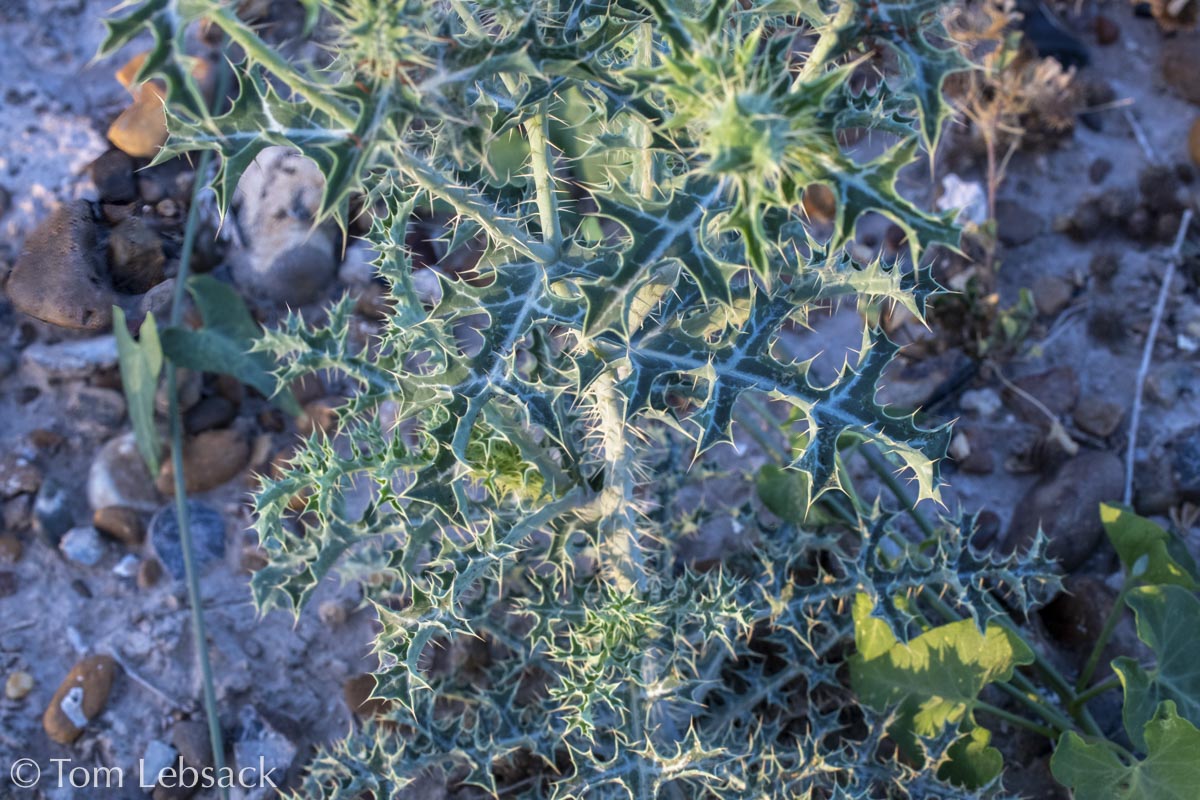
Argemone sanguinea, Palmview, Hidalgo Co. 3847
| Scientific Name | Argemone sanguinea | USDA PLANTS Symbol | ARSA4 |
| Common Name | Red Prickly Poppy, Rose Prickly Poppy | ITIS Taxonomic Serial No. | 18927 |
| Family | Papaveraceae (Poppy) | SEINet Reference |
Click Here |
| Description | Habitat: Dry soils in open areas; meadows, open brush and woodlands, edges of fields and along roadsides and railroad tracks. Plant: Erect annual or perennial with single or a few branching, prickly stems 16 to 48 inches tall; yellow sap. Leaves: Alternate stem leaves, gray-green with prominent bluish-white veins; lower leaves are deeply lobed almost to the midrib, up to 8 inches long; upper leaves are much smaller; upper leaf surfaces are unarmed or sparingly prickly on veins; lower surfaces are prickly on veins; lobe margins have pointed, prickly tips. Inflorescence: Large flowers 4 inches across with delicate rose to pink (can be red, lavender, bronze or white) petals and many (~150) stamens with yellow to lavender anthers; flowers closely subtended by 1 or 2 leaf-like bracts; buds are ellipsoid to oblong, prickly, 0.6 to 0.8-inch long and ~0.5-inch across. Bloom Period: February to April. References: "Manual of the Vascular Plants of Texas" by Correll and Johnston, "Wildflowers of Texas" by Michael Eason and Flora of North America. |
BONAP Distribution Map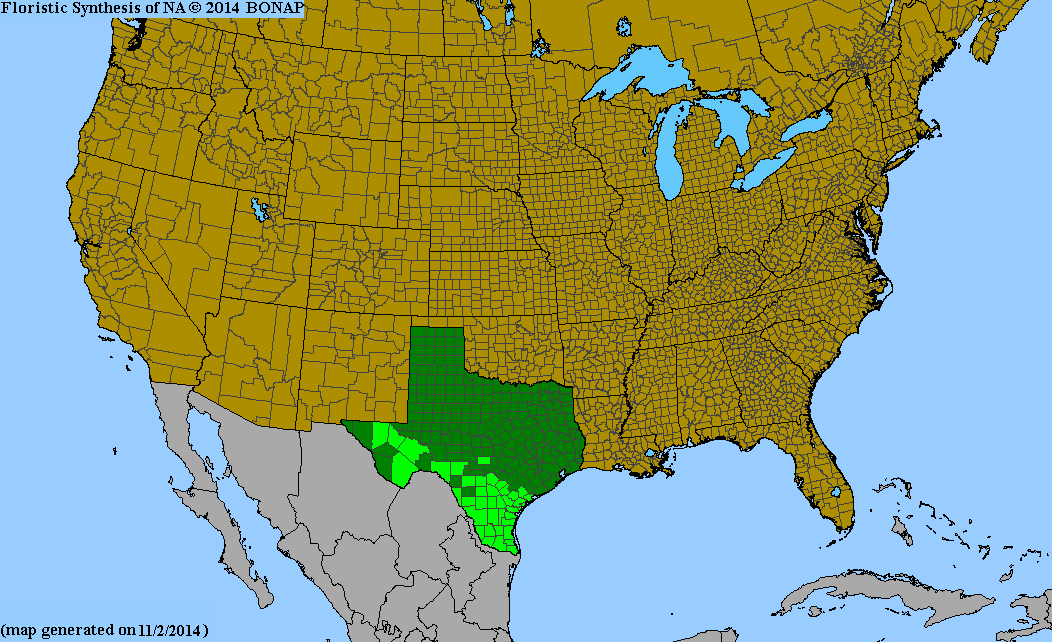 Map Color Key |
Texas Status: Native |
Banner photo of Castilleja indivisa and Lupinus ssp. taken along FM 1323 north of Johnson City, Blanco County
© Tom Lebsack 2026
Every attempt is made to provide accurate, up-to-date, and relevant information, but the completeness or accuracy of any information presented on this website cannot be guaranteed. I use authoritative references to insure high standards of accuracy and review and update the information frequently. Please contact me if you find errors.